The Mountains Do Not Forgive: A Guide to Safety and Survival

ФОРУМ ГОРЕЦ
Feb 6, 2026
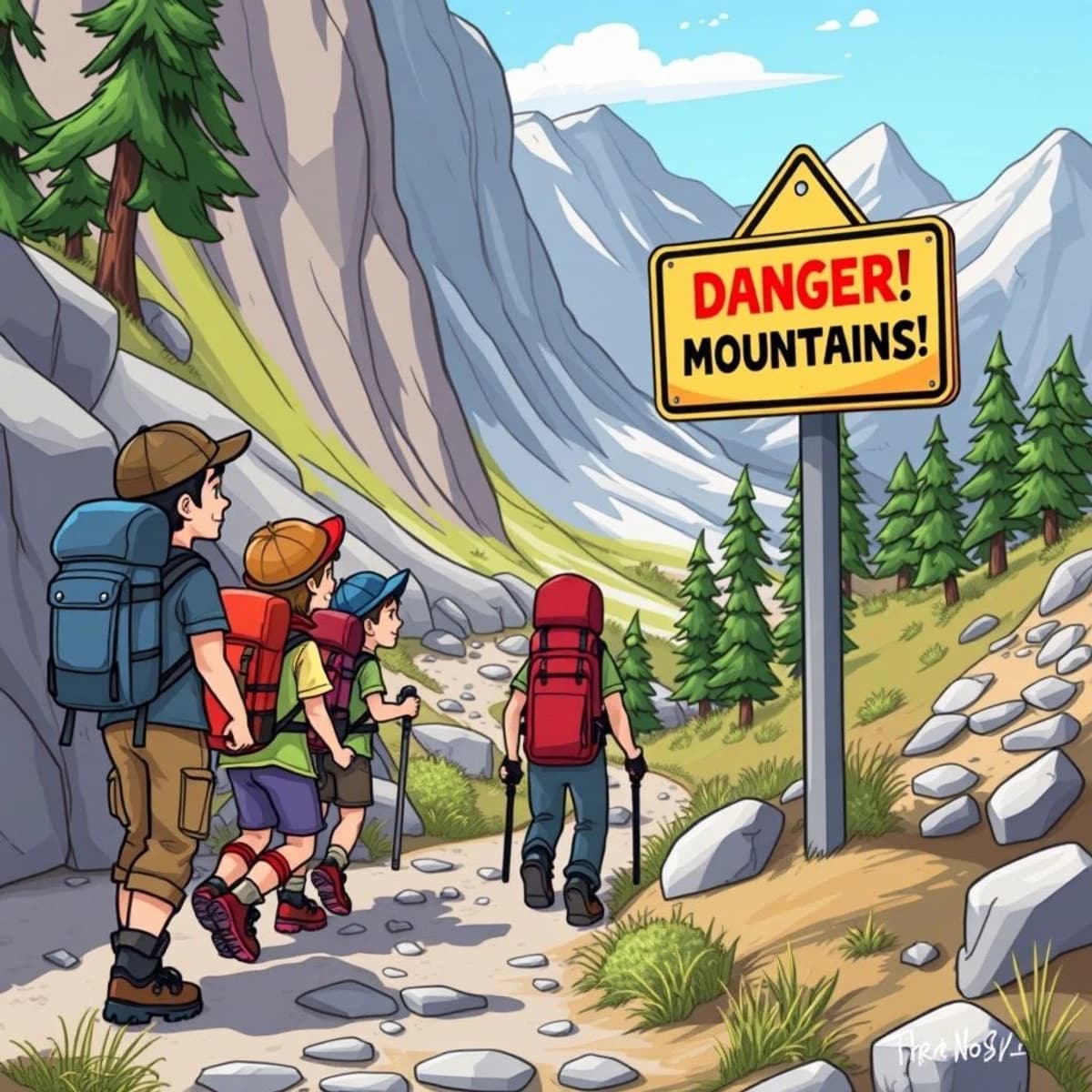
An article about mountain safety and emergency preparedness.
Any mountain excursion carries a risk.
⚠ When heading into the mountains on your own, remember these very important things:
1. WEATHER – IN THE MOUNTAINS IT CHANGES DIFFERENTLY THAN ON THE PLAIN! ⛈
In the mountains, weather changes instantly: the sun gives way to a gale, and fog can obscure the trail in minutes – everything around becomes uniform and white. ❄ Even in summer, snowfalls and sudden temperature changes are possible.
🔹 Always check the forecast (although this is no guarantee!)
🔹 Bring warm, waterproof clothing – even if there's not a cloud in the sky and the temperature is 30°C (86°F)
🔹 Be prepared for an emergency return – save the track on your phone, even if you've been there "a hundred times"
2. DANGEROUS TRAILS: RISK OF ROCK FALLS AND AVALANCHES
Mountains are a living, moving element. Rockfalls are possible on steep slopes, and avalanches are possible in winter and spring.
🔹 Avoid moving under dangerous cornices
🔹 Don't camp under steep slopes – rocks fall "for a reason" (goats and other livestock graze in the mountains 🐐)
🔹 Don't sit with your back to the slope – always monitor dangerous areas
3. ALTITUDE IS NOT YOUR FRIEND: MOUNTAIN SICKNESS ⛑
The higher you climb, the less oxygen you have. Mountain sickness begins with headaches and nausea, but can lead to pulmonary or cerebral edema.
🔹 Don't force the climb
🔹 Drink more water (even if you don't feel like it!)
🔹 At the first signs of pulmonary or cerebral edema, descend immediately
🔹 Avoid sudden elevation gains (for example, from 3,000 m to 4,500 m in a day + overnight) — this can be fatal
4. GETTING LOST IS EASIER THAN YOU THINK 🗺
Even on popular routes, it's possible to take a wrong turn, especially in fog or darkness.
🔹 Be sure to have offline maps (OsmAnd, Topomaps of Uzbekistan)
🔹 Communicate your route (even if it's just "a short walk")
🔹 Don't rely on your memory — fog, wind, and snow will blind you
5. COLD AT NIGHT: HYPOTHERMIA – A SILENT KILLER ❄☠
Even in summer, nighttime temperatures in the mountains can drop below freezing.
🔹 Wet clothes + wind = rapid hypothermia
🔹 You can die from the cold even at 15°C (if there's a strong wind!)
🔹 Always have extra warm clothes
If you get lost:
✔ Don't wait until the last minute — find or create shelter
✔ Build a fire (if possible)
6. WATER = LIFE: DEHYDRATION WHILE HIKING 💧
Dehydration sets in faster at altitude.
🔹 Drink even if you're not thirsty (thirst is dulled in the cold!)
🔹 Avoid alcohol and coffee (they increase fluid loss)
🔹 Check your water sources — mountain streams can be polluted
(In the mountains, someone always pees above you... 😬)
7. SOLENESS VS. GROUP 👥
Solo hiking is risky: there's no one to help if you get injured.
🔹 The ideal minimum is 3 people
🔹 If you're hiking alone, leave your route plan with friends or emergency services
8. "THIS ROUTE IS EASY" IS A FATAL MISTAKE ⚠
Even simple trails can become deadly due to:
careless handling of equipment
weather changes
injury to a participant
🔹 Don't overestimate yourself
🔹 Learn from the experiences of others
🔹 Always have a plan B
9. BE TECHNICALLY PREPARED 🔋
🔹 Backup power source — a 10,000 mAh power bank isn't heavy, but it can be a lifesaver
🔹 A spare phone with offline maps (for difficult hikes)
🔹 Brightly colored clothing (not khaki — to avoid being mistaken for a saboteur 🎯)
10. BEFORE MAKING A DECISION, ASK YOURSELF:
❓ "What if…?"
...there's no trail?
...we can't cross the pass?
...we can't cross the river?
Mountains are unforgiving — be prepared for anything!